Jon M. Chu’s two-part cinematic adaptation of the beloved musical, “Wicked,” has finally concluded its journey down the Yellow Brick Road with the release of “Wicked: For Good.” But after 297 minutes of screen time across both films—making the total runtime roughly double that of the stage show—the real question is: Does this monumental undertaking soar with emerald-green magic, or does its sheer scale leave audiences simply sighing, “Oh, my”?
The initial reviews for “For Good” suggest the answer depends entirely on your prior bewitchment.
The Good: A Spectacle of Scale and Star Power
If “Wicked” is fundamentally about spectacle, power ballads, and retina-testing technicolor, then “For Good” delivers in spades. The “muchness” that has always defined the Oz prequel—a non-stop assault of allegory and anthems—is fully intact.
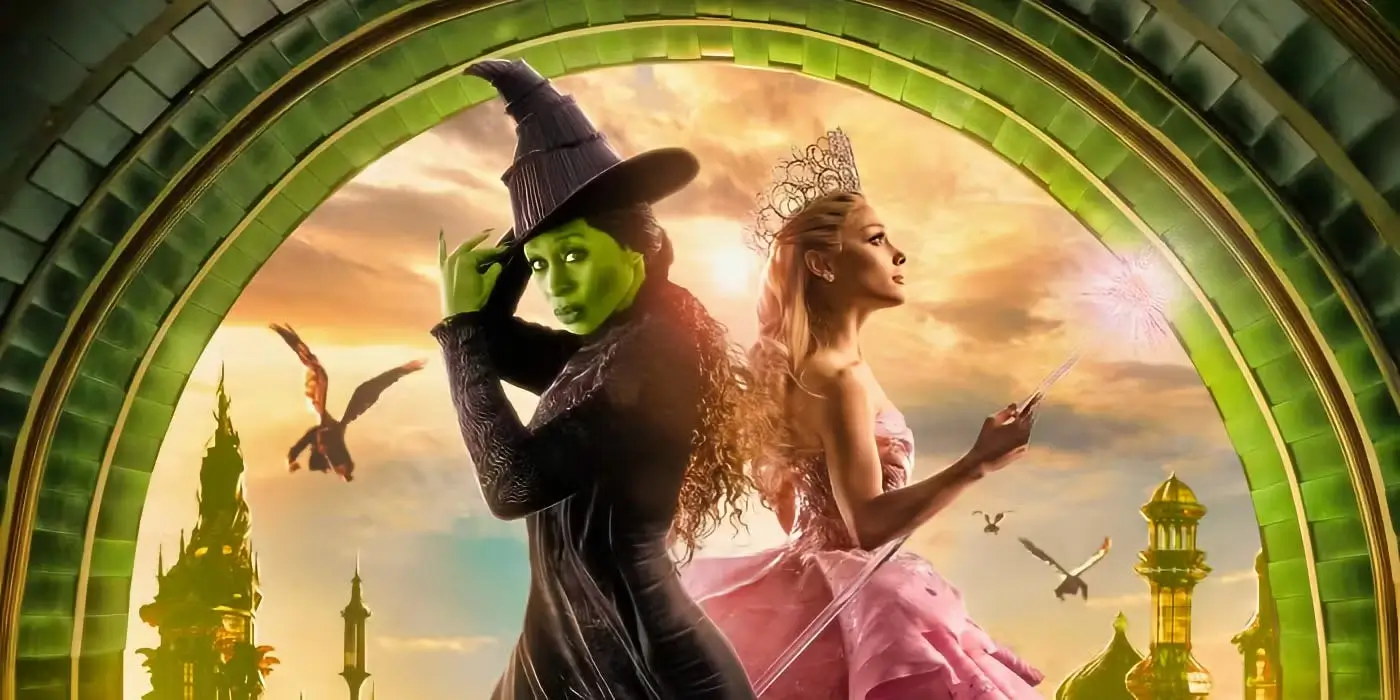
For those who loved the earnest, over-the-top vision of Part One, the second chapter is a generous, welcoming second helping. Since both films were shot simultaneously, the tone is consistent, offering more of the soaring soliloquies and the undeniable chemistry between its leading ladies, Cynthia Erivo (Elphaba) and Ariana Grande (Glinda).
The films’ momentum is largely credited to this powerhouse duo, forging a grand spectacle of female friendship that is the emotional core rising above the political machinations of Oz.
Cynthia Erivo, in particular, is noted for elevating the material. Her Elphaba—demonized as the Wicked Witch of the West—imbues the character with a complex mix of hopeful possibility and fearful impossibility, especially when singing new additions like “No Place Like Home.”
The Rub: Is It a Movie, or a Production?
However, the sheer size of the adaptation—clocking in at 137 minutes for “For Good” alone—is where the film draws criticism. For viewers who found Part One mildly overwhelming, the sequel offers little relief. The review suggests the film often feels more like a “Production than a movie,” with characters being orchestrated across elaborate set pieces rather than simply existing in a cohesive, lived-in world.
Despite the source material being the height of Old Hollywood’s magic (“The Wizard of Oz”), the film reportedly struggles to orient the audience in Oz as a setting. The constant jump from one grand spectacle to the next prevents the actors from having a chance to “simply be,” leaving some viewers watching from an admiring, yet distant, mezzanine.
Timeliness That Hits Hard (Perhaps Too Hard)
Where “For Good” truly distinguishes itself is in the political allegory inherent in the “Wicked” narrative. As Elphaba lives in exile and the government of Oz, led by the Wizard (Jeff Goldblum) and Madame Morrible (Michelle Yeoh), issues warnings to “Trust no animals!” and institutes travel bans, the metaphors for propaganda, scapegoating, and multiculturalism are pushed to the forefront.
This fervent belief in empathy and resistance against a devolving Oz makes “For Good” the most pointed and timely interpretation yet, expanding upon themes that have resonated since the 1995 book. Yet, this very frankness is called out as both the film’s most stirring and most heavy-handed trait.
Final Verdict: A Colossal Undertaking for the Devoted
While the catchiest tunes (“Popular,” “Defying Gravity”) are in the rearview, “Wicked: For Good” is a tale of storm clouds, rebellion, and a resistance mounted by the exiled witch. It sticks the emotional landing with its core themes of friendship and defiance, largely thanks to Erivo’s powerful performance.
Ultimately, “Wicked: For Good” is a visually stunning, politically charged, and emotionally resonant conclusion that fully embraces the “muchness” of its source material. If you’re a devoted fan, prepare to be delighted. If you prefer a lighter touch, you might find yourself yearning for a simpler path, one where a single click of the heels—or tick of the clock—is enough to get home.
What did you think of the grand finale? Did the 297-minute journey down the Yellow Brick Road feel worth it, or was the spectacle simply too much?